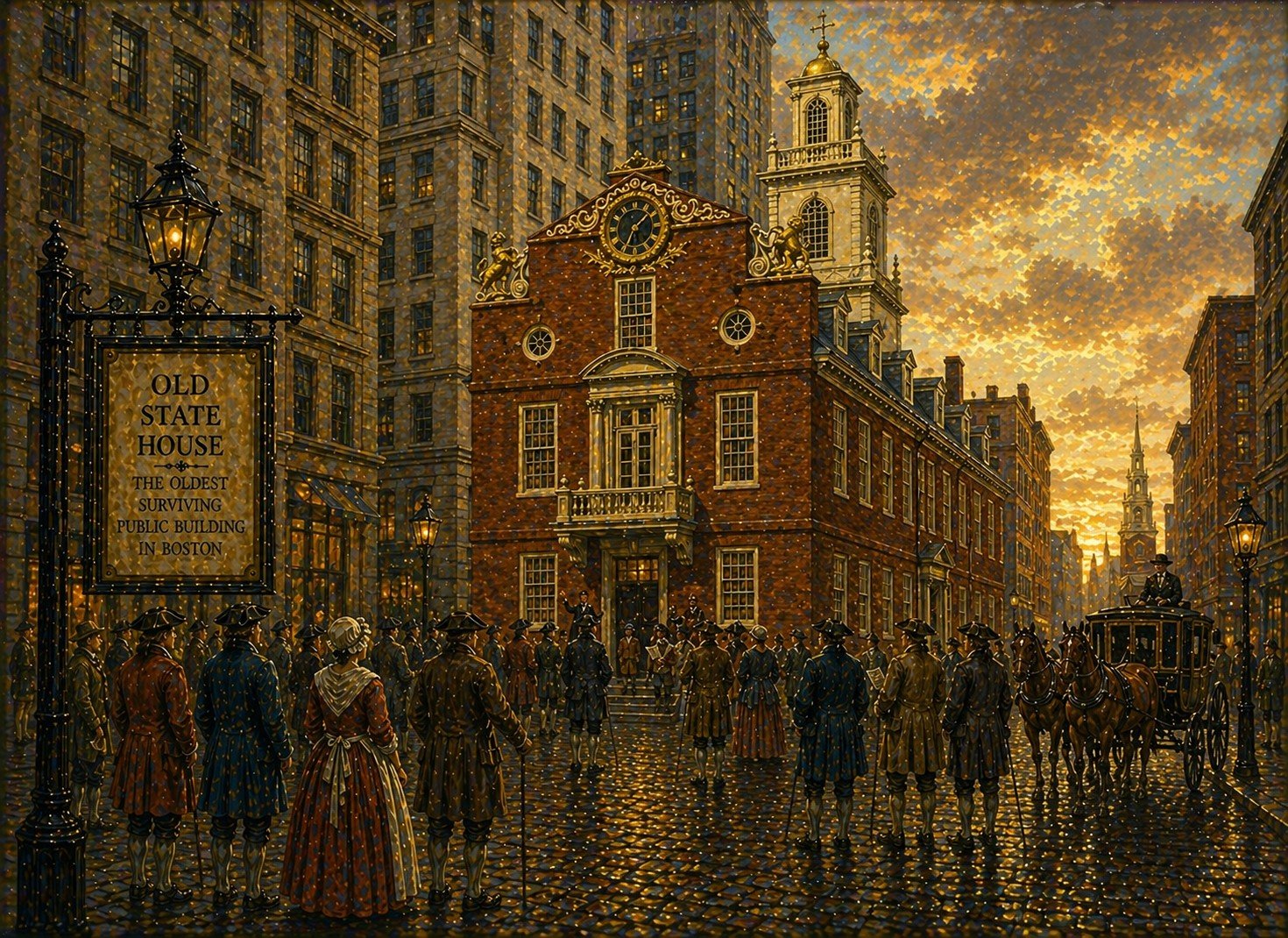
The Boston Massacre Site is one of the most powerful and emotionally resonant stops along the Freedom Trail. Located just outside the Old State House on State Street, this site marks the location where a deadly confrontation between British soldiers and Boston civilians took place on March 5th, 1770. Though physically modest today, it represents a pivotal moment in the growing conflict that would lead to the American Revolution.
In the years leading up to the massacre, tensions in Boston had been steadily rising. British troops had been stationed in the city since 1768 to enforce unpopular laws and maintain order, but their presence was widely resented by the local population. Economic strain, political frustration, and frequent confrontations between soldiers and civilians created a volatile atmosphere. The streets of Boston had become a place where everyday interactions could quickly escalate into conflict.
On the evening of March 5th, 1770, a small dispute between a British sentry and a group of colonists grew into a larger confrontation. A crowd gathered, taunting the soldiers with insults, snowballs, and debris. Reinforcements arrived under the command of Captain Thomas Preston, but the situation only intensified. In the confusion and tension, shots were fired into the crowd. Five colonists were killed, including Crispus Attucks, who is often regarded as the first casualty of the American Revolution.
Today, the exact location of the Boston Massacre is marked by a circle of stones embedded in the cobblestone street. This simple marker stands in stark contrast to the dramatic significance of what occurred there. Visitors walking the Freedom Trail often stop at this point, guided by the red brick line, to reflect on the moment when political tension turned into deadly violence.
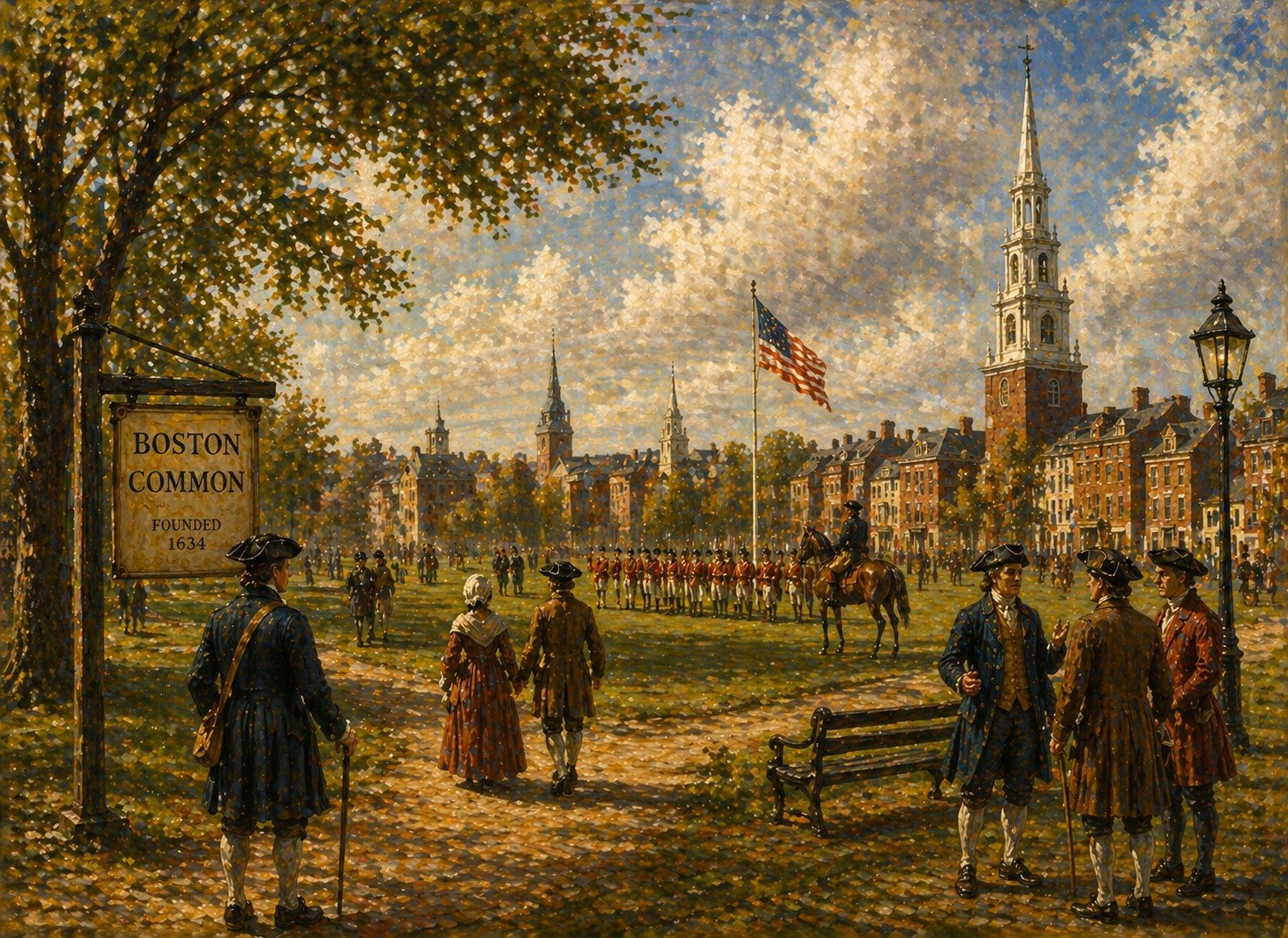
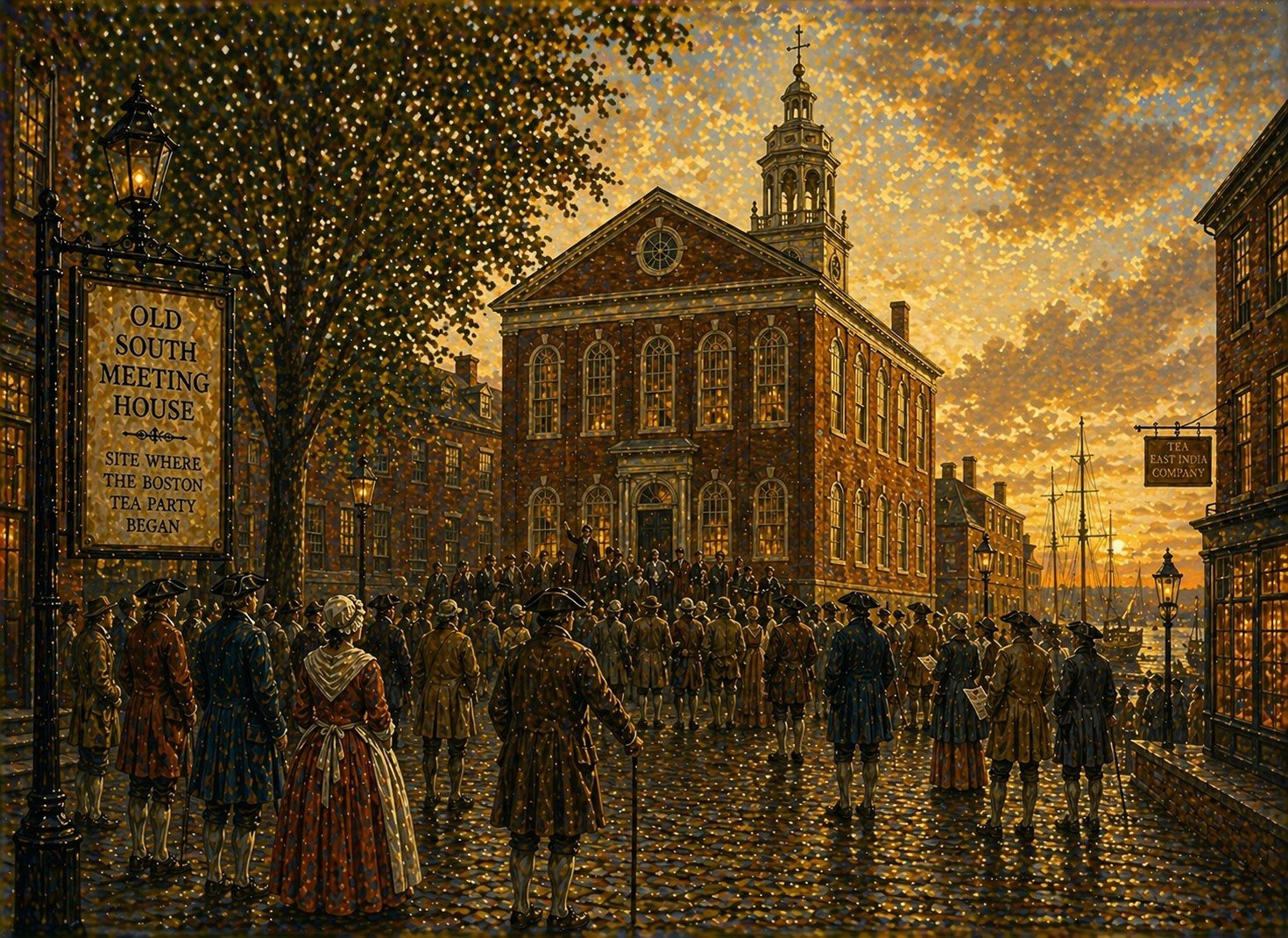
The Boston Massacre Site is closely tied to the narrative of the Freedom Trail because it represents a turning point. Earlier stops along the trail, such as Boston Common and Old South Meeting House, highlight growing dissatisfaction and organized protest. The massacre, however, marks the moment when those tensions erupted into violence, making the conflict between the colonies and Britain impossible to ignore.
The aftermath of the massacre was just as important as the event itself. Colonial leaders, including Samuel Adams and Paul Revere, used the incident as a powerful tool for shaping public opinion. Revere’s famous engraving depicted the event in a way that emphasized British aggression, helping to spread outrage throughout the colonies. The incident became a rallying point for resistance, strengthening the argument that British rule was oppressive and unjust.
At the same time, the legal response to the massacre demonstrated the complexity of the situation. The British soldiers involved were put on trial, with John Adams serving as their defense attorney. Despite strong anti-British sentiment, Adams argued for a fair trial, emphasizing the importance of justice and the rule of law. Most of the soldiers were acquitted, a reminder that even in times of intense violent conflict, legal principles were upheld.
As a physical space, the Boston Massacre Site offers a unique experience for visitors. Surrounded by modern buildings and the bustle of downtown Boston, it is easy to overlook its significance. Yet this juxtaposition adds to its impact, highlighting the continuity of the city’s history. The same streets that once witnessed violence and conflict are now part of a thriving urban environment, where people pass by daily.
The site also plays an important educational role. Guided tours and historical reenactments often take place nearby, helping to bring the events of 1770 to life. These interpretations provide context, allowing visitors to understand not only what happened, but why it mattered. By connecting the physical location to the broader narrative of the revolution, the site becomes more than just a marker, it becomes a point of engagement with history.
Ultimately, the Boston Massacre Site is a place where the abstract ideas of liberty and resistance take on a human dimension. The deaths that occurred here were not just political symbols but real losses that affected families and communities. This personal aspect makes the site particularly powerful, reminding visitors that the struggle for independence came at a cost.
As part of the Freedom Trail, the Boston Massacre Site stands as a defining moment in the journey from protest to revolution. It captures the intensity of the conflict, the role of public perception, and the importance of justice in shaping the emerging identity of the United States. Through its simplicity and significance, it remains one of the most compelling stops along the trail, offering a lasting connection to the origins of American independence.