The Old State House is one of the most significant and recognizable landmarks along the Freedom Trail. As the oldest surviving public building in Boston, it stands at the center of the city’s colonial history and serves as a focal point for understanding the political and social tensions that led to the American Revolution.
Built in 1713, the Old State House functioned as the seat of colonial government under British rule. It housed the offices of the royal governor, the council chamber, and the assembly room where elected representatives met. This dual structure, combining royal authority with local governance, made the building a physical representation of the complex relationship between the colonies and the British Crown. Decisions made within its walls affected trade, taxation, and the daily lives of Boston’s residents, placing it at the heart of colonial administration.
One of the most important features of the building is its balcony, which overlooks what is now State Street. From this vantage point, key announcements were made to the public, including proclamations and official statements. After independence, the balcony took on new meaning as a symbol of American self-governance. Today, it is often associated with the public reading of the Declaration of Independence in 1776, marking a transition from colonial rule to national identity.
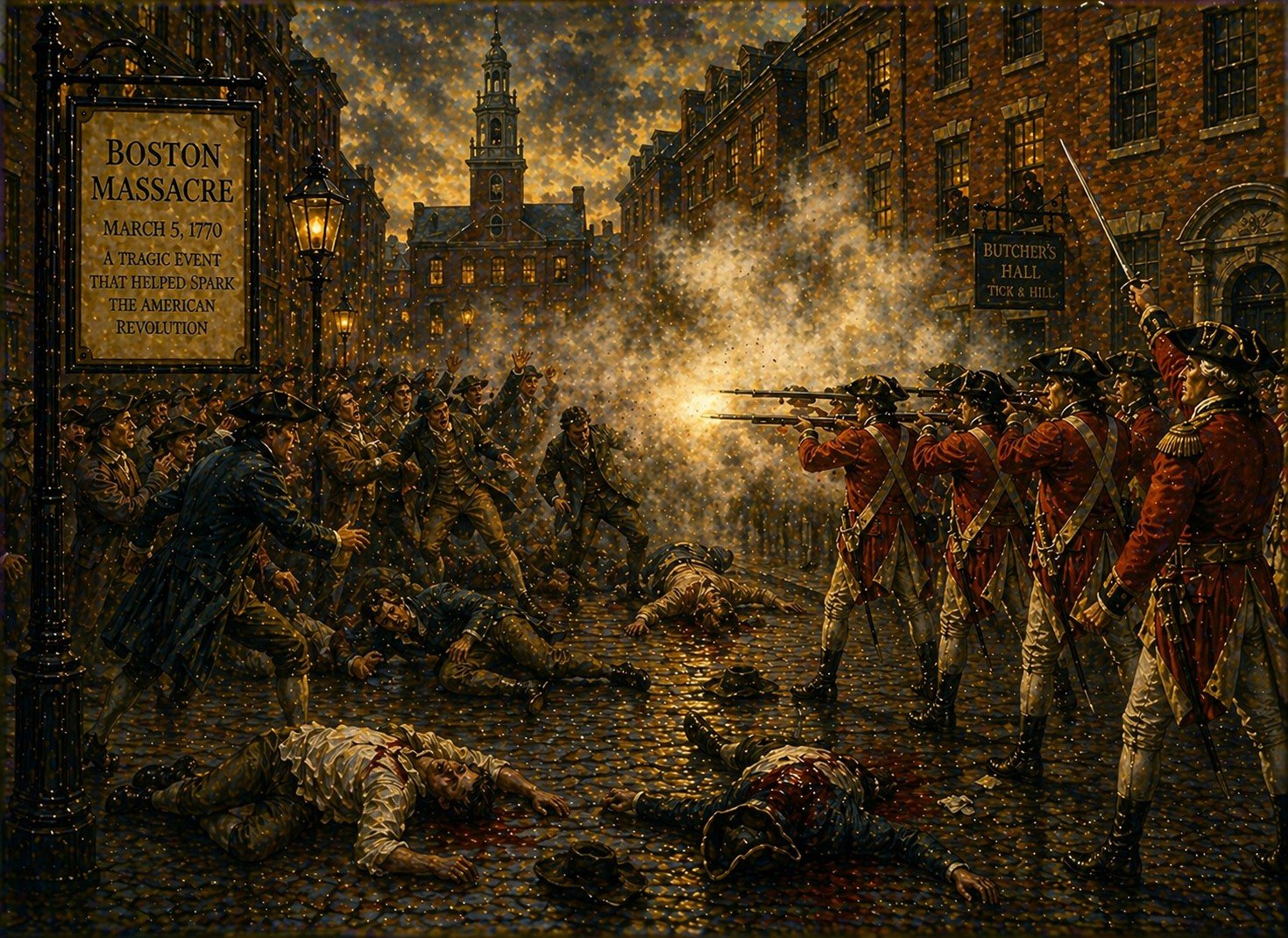
The Old State House is perhaps best known as the site of the Boston Massacre, one of the most pivotal events leading up to the revolution. On March 5, 1770, tensions between British soldiers and Boston residents erupted into violence just outside the building. British troops fired into a crowd of colonists, killing five men, including Crispus Attucks. The incident intensified anti-British sentiment and was widely used as propaganda by colonial leaders to rally support against British authority.
The location of the massacre is marked today by a circle of stones embedded in the street near the Old State House. Visitors walking the Freedom Trail often pause here to reflect on the massacre and its significance. The proximity of the massacre site to the seat of government underscores the extent to which political tensions had spilled into public life, transforming the streets of Boston into a stage for conflict.
Inside the Old State House, the restored chambers provide insight into colonial governance. The council chamber, with its ornate decorations and royal symbols, reflects the presence of British authority, while the representatives’ chamber illustrates the role of local leaders in shaping policy. These spaces highlight the contrasts and tensions that defined colonial politics, offering visitors a deeper understanding of the issues that led to revolution.
As a stop on the Freedom Trail, the Old State House represents a critical turning point in the narrative of American independence. While earlier sites along the trail reflect growing dissatisfaction and protest, this location captures the moment when those tensions erupted into violence. It marks the shift from political disagreement to open conflict, setting the stage for the events that would follow.
The building’s survival adds to its significance. Despite fires, urban development, and the passage of time, the Old State House remains standing amid modern skyscrapers. This juxtaposition of old and new highlights the continuity of Boston’s role as a center of political and economic activity. It also emphasizes the importance of preserving historical landmarks as tangible connections to the past.
Today, the Old State House operates as a museum, offering exhibits that explore its history and the broader context of the American Revolution. Through artifacts, displays, and guided tours, visitors can engage with the stories of the people who lived and worked in and around the building. These educational efforts ensure that the significance of the site remains accessible to future generations.
The Old State House also serves as a reminder of the power of place in shaping historical memory. It is not just the events themselves that matter, but where they occurred. Standing in the space where colonial leaders debated policy and where violence broke out in the streets, visitors can gain a more immediate and personal connection to history.
Ultimately, the Old State House is a cornerstone of the Freedom Trail and a symbol of the events that led to American independence. Its architecture, location, and historical associations combine to tell a story of governance, protest, and transformation. As one of the most important sites on the trail, it offers a compelling and tangible link to the origins of the United States.